One of the most common and reasonable reactions patients have is this:
- “If nothing hurts, why would anything be wrong?”
- “Shouldn’t pain be the signal that something needs treatment?”
- “Am I being asked to fix something that isn’t broken?”
These questions are not skepticism—they’re logic.
And for a thoughtful, adult decision-maker, they are exactly the right questions to ask.
This page exists to remove uncertainty, not to create urgency.
Its purpose is to explain—clearly and calmly—how dental problems can exist without pain, how dentists identify them, and how you can evaluate whether a recommended general dentistry treatment truly makes sense for you.
Can You Have a Serious Dental Problem Without Pain?
Yes—and this is not the exception. It is the norm.
Pain is not a reliable early indicator of dental disease.
It usually appears late, after the body’s compensatory mechanisms are no longer sufficient.
From a biological standpoint:
- Teeth do not have warning systems like muscles or joints
- Nerves respond after inflammation or damage reaches a threshold
- Bone loss, structural cracks, and early decay often progress silently
Many clinically significant issues develop in phases:
- Phase 1: Structural or biological change, no symptoms
- Phase 2: Intermittent or mild awareness
- Phase 3: Persistent pain, infection, or functional loss
Dentists aim to identify problems in Phase 1 or early Phase 2—before pain removes your ability to choose calmly.
Common Reasons Dentists Recommend Treatment Without Pain
When treatment is recommended despite the absence of pain, it is usually based on predictable progression, not speculation.
Common findings include:
- Early-stage tooth decay visible on X-rays
- Cracks that compromise tooth integrity but haven’t reached the nerve
- Leaking fillings or crowns that appear intact externally
- Gum disease with bone loss but no discomfort
- Bite imbalances creating gradual structural stress
- Inflammation that is controlled—for now—by your immune system
In these situations:
- The tooth is functioning
- Daily life feels normal
- The risk lies in what happens next, not what is happening today
The recommendation is not about urgency—it’s about timing.
How Dentists Know There’s a Problem Even Without Symptoms
Dentistry relies heavily on objective indicators, not pain reports alone.
Key diagnostic tools include:
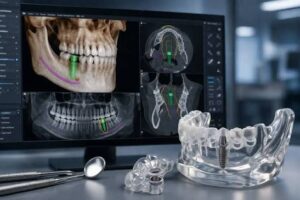
Digital X-rays
Reveal decay, bone changes, and hidden structural issues long before symptoms appear.
Clinical examination
Detects micro-fractures, seal breakdowns, and early gum disease.
Bite analysis
Identifies uneven forces that can quietly damage teeth over time.
Historical comparison
Changes from previous visits often matter more than a single snapshot.
Pattern recognition
Based on thousands of similar cases and known progression pathways.
Pain is subjective.
Structural change is measurable.
Dentists are trained to act on what is measurable, especially when waiting increases complexity rather than clarity.
How to Tell If a Recommended Treatment Is Truly Necessary
A reasonable concern is not “Why is treatment suggested?”
It is “How confident can I be that this is the right decision?”
A recommendation is usually well-founded if:
- The dentist can show you the issue (X-ray, image, mirror)
- The explanation focuses on structure and biology, not fear
- Alternatives—including monitoring—are discussed
- The risks of waiting are explained calmly, without pressure
- The treatment plan prioritizes durability over speed
Questions that help you evaluate necessity:
- What specifically will change if nothing is done?
- Is this condition stable or progressive?
- What are the consequences of delaying six months?
- How does this affect long-term predictability?
Good dentistry invites understanding.
It does not rely on blind trust.
What Happens If You Wait Until It Hurts?
Waiting for pain feels intuitive—but it often transfers control away from you.
When pain finally appears:
- Inflammation may already be irreversible
- Conservative options may no longer be sufficient
- Treatment may become more invasive
- Decision-making becomes reactive rather than strategic
What often changes is not just the procedure, but:
- Recovery time
- Long-term prognosis
- Structural preservation
- Overall predictability
Many advanced dental treatments are not responses to pain—they are responses to missed windows of prevention.
Patients rarely regret treating something early. They often regret discovering how limited the options became later.
FAQ
D’Amico Dental Care — Watertown & Wayland MA
Ready to Take the Next Step Toward a Healthier Smile?
Schedule your personalized consultation at D’Amico Dental Care today — precise diagnostics, transparent planning, zero pressure.