Quick Answer you Are Looking For
Most dental veneers last 10–20 years when designed and bonded correctly.
However, lifespan is not determined by the veneer alone. It depends on material quality, tooth preparation, bite balance, bonding technique, and patient habits.
Key insights patients rarely hear:
- Porcelain veneers: typically 12–20 years
- Composite veneers: usually 5–8 years
- Bruxism (grinding) is the #1 reason veneers fail early
- Most veneer failures happen during bonding, not years later
- A diagnostic-first treatment system dramatically increases longevity
At D’Amico Dental Care in Wayland & Watertown MA, veneers are planned through a structured diagnostic and digital workflow, allowing patients to preview their smile and reducing the risk of premature failure.
Ready to Learn How Long Your Smile Can Last?
Book your diagnostic smile consultation at D’Amico Dental Care today.
📍 359 Main St, Watertown, MA 02472 | 📍 241 Boston Post Rd, Wayland, MA 01778
✉️ [email protected]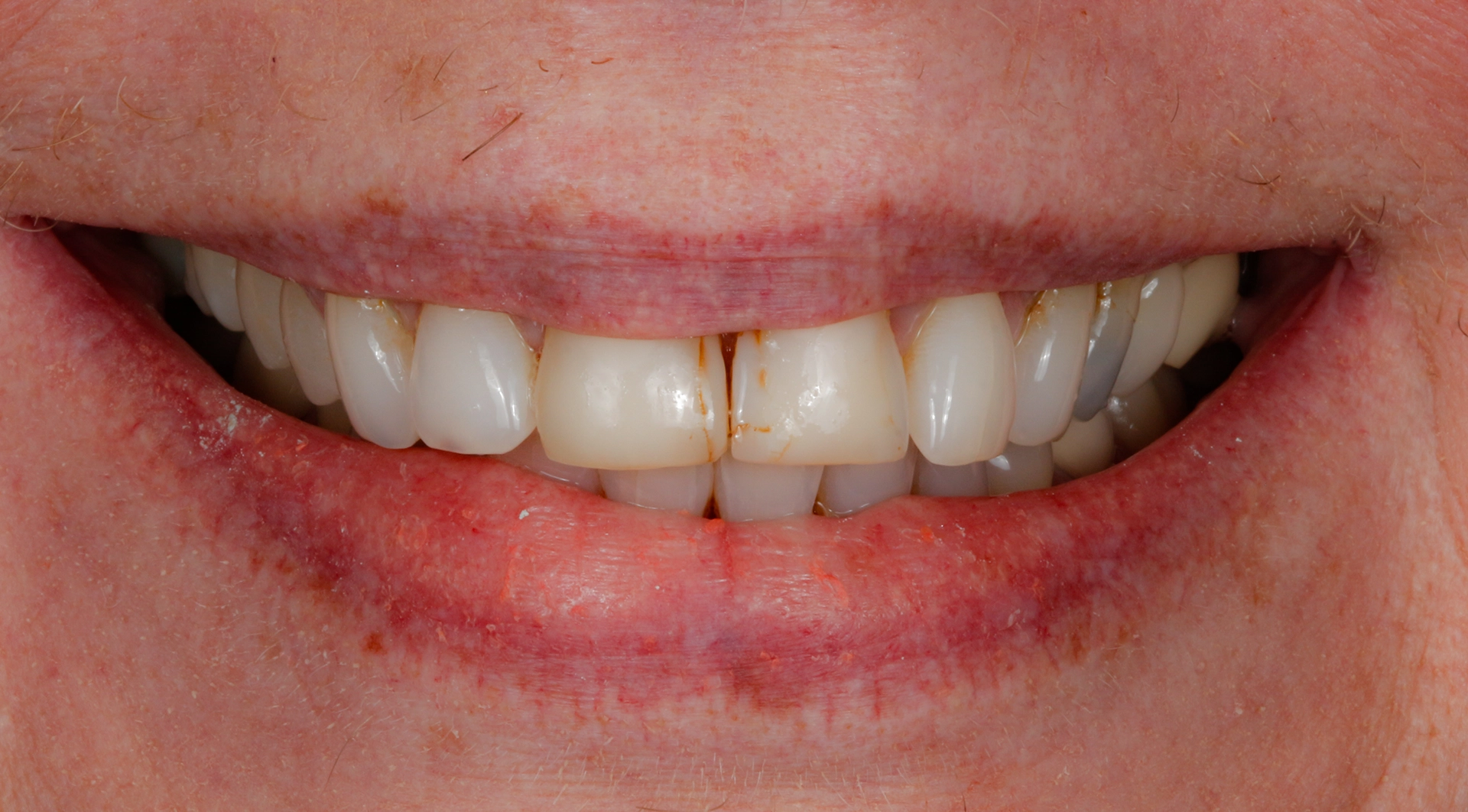
Before
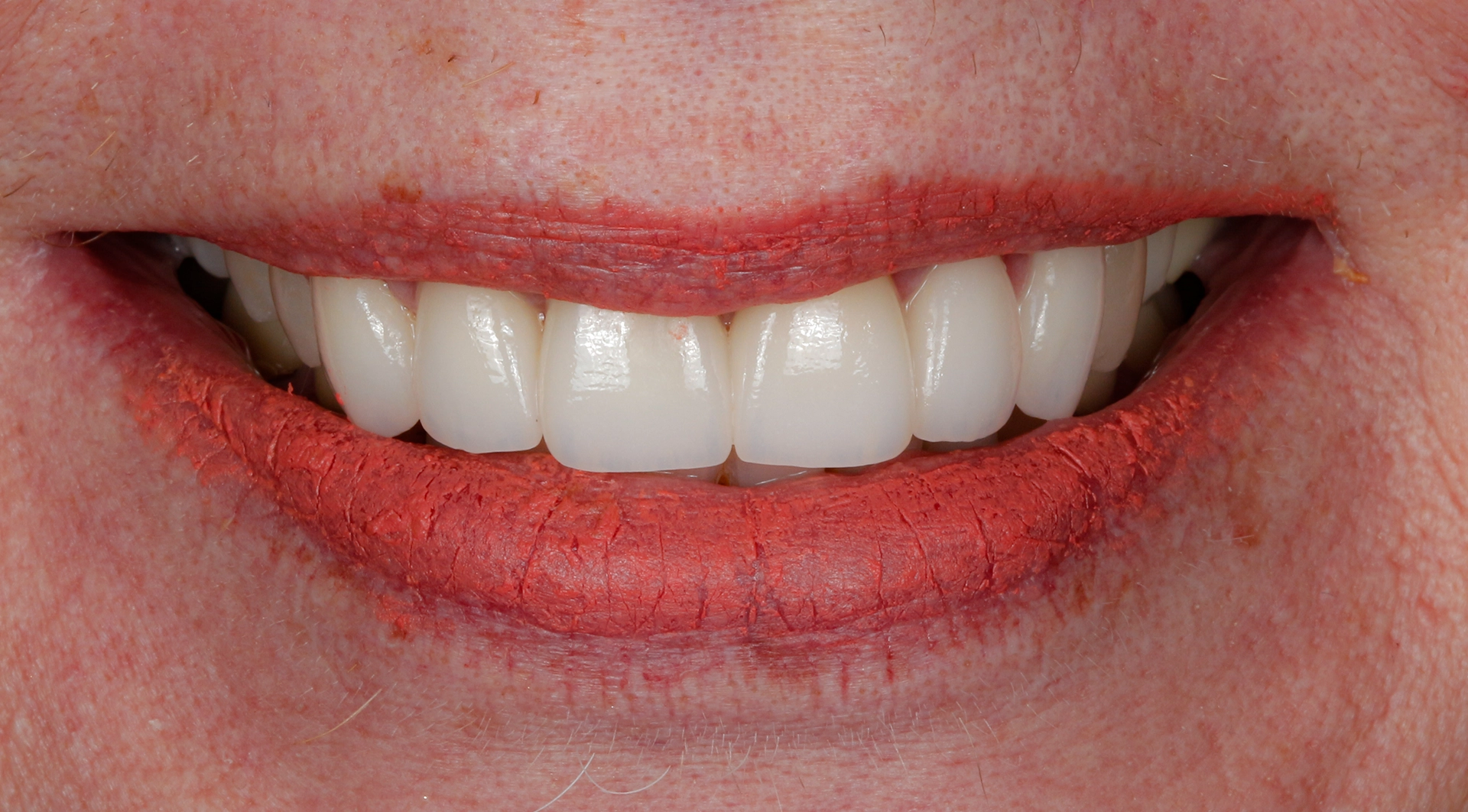
After 6 Years Follow-up
Dental Veneers Lifespan: The Clear, Evidence Based Answer Patients Are Looking For
Patients in Wayland & Watertown MA often encounter two extreme claims online:
- “Veneers last forever.”
- “Veneers must be replaced every 5 years.”
Both are misleading.
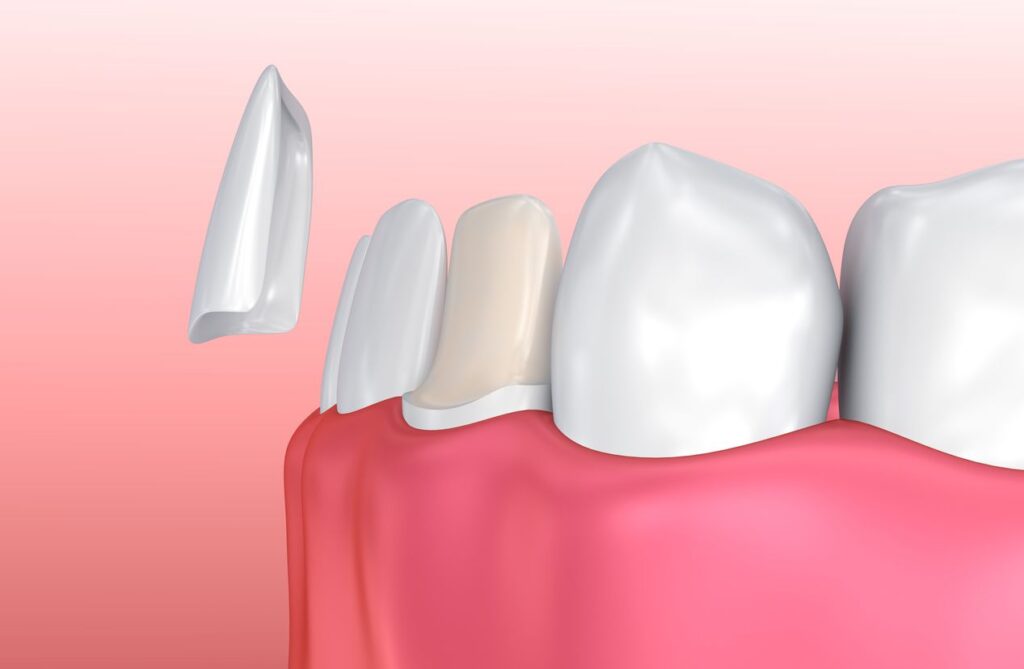
Dental veneers are thin ceramic or composite shells bonded to the front of teeth to improve color, shape, alignment, and symmetry. Like any medical restoration, they have an expected clinical lifespan.
The key word is expected. Because longevity depends heavily on how they are designed and bonded.
Studies in prosthetic dentistry show survival rates influenced by:
- Material properties
- Adhesive bonding protocols
- Occlusion (how teeth meet when biting)
- Patient habits such as grinding or nail biting
In other words: veneers do not fail randomly. They fail for identifiable reasons.
Understanding those reasons puts control back in your hands.
On Average, How Long Do Dental Veneers Really Last?
Clinical research and long-term follow-up studies suggest:
Porcelain veneers
- Average lifespan: 12–20 years
- Survival rates after 10 years: 90–95%
Composite veneers
- Average lifespan: 5–8 years
- More prone to staining and wear
Why the difference?
Porcelain (often lithium disilicate ceramics like IPS e.max) is stronger, more stain-resistant, and structurally stable compared with resin composites.
However, even porcelain veneers will not reach their full lifespan if key clinical steps are skipped.
And surprisingly, material is not the most important factor.
The real determinant of veneer longevity lies in something patients rarely hear about…
What Actually Determines the Lifespan of Veneers? (Not What Instagram Says)
Scrolling through social media, veneers often look like a quick cosmetic upgrade.
But in reality, veneers behave more like micro-engineered structures bonded to living teeth.
Their success depends on three foundational pillars:
- Material selection
- Tooth preparation
- Adhesive bonding protocol
If any one of these pillars is weak, longevity drops dramatically.
Let’s look at them individually.
Veneer Material: Porcelain vs Composite (Durability Compared)
Imagine two protective shells placed over a tooth.
One behaves like high-strength ceramic glass.
The other behaves like a reinforced dental resin.
Both can look beautiful. But they perform differently over time.
Porcelain veneers
Advantages:
- Highly resistant to staining
- Exceptional color stability
- Stronger structural integrity
- Natural light reflection similar to enamel
Limitations:
- Higher laboratory cost
- Requires precise bonding
Composite veneers
Advantages:
- Lower initial cost
- Can often be completed in one visit
- Easier repairs
Limitations:
- Stains more easily
- Wears faster
- Shorter lifespan
This is why porcelain veneers are typically recommended for long-term aesthetic rehabilitation.
But material alone is not enough.
The next factor is often overlooked—and it directly affects how much of your natural tooth remains protected.
Tooth Preparation: How Much Is Too Much?
Patients often fear that veneers require aggressive drilling.
That fear usually comes from outdated techniques.
Modern veneer dentistry aims for minimal preparation, preserving as much natural enamel as possible.
Why does enamel matter?
Because enamel provides the strongest bonding surface in dentistry.
If too much enamel is removed:
- Bond strength decreases
- Risk of debonding increases
- Veneer lifespan shortens
The goal of advanced cosmetic dentistry is additive design:
Instead of cutting teeth smaller, dentists design veneers that add shape while preserving structure.
Patients frequently say after consultation:
“I didn’t realize veneers could be this conservative.”
But even perfect preparation does not guarantee success.
The real make-or-break moment happens during bonding.
Bonding Protocols: The Most Underrated Factor in Veneer Longevity
Many veneer failures are incorrectly blamed on the material.
In reality, the failure often occurs at the adhesive interface between tooth and ceramic.
Bonding involves multiple precise steps:
- Tooth surface conditioning
- Ceramic etching and silane application
- Adhesive placement
- Resin cement curing
- Removal of microscopic excess cement
Each step must be controlled under strict isolation.
If moisture contamination occurs during bonding, the adhesive interface weakens.
This is why experienced clinics treat veneer bonding almost like microsurgery.
Because a veneer bonded perfectly today can remain stable for decades.
But if bonding is rushed, problems appear much sooner.
The next question patients ask naturally follows:
What actually causes veneers to fail early?
What Shortens the Lifespan of Veneers? (And How to Avoid It)
Patients often worry that veneers will suddenly break.
The reality is more predictable.
Most veneer complications arise from three identifiable factors:
- grinding forces
- bite imbalance
- maintenance habits
The encouraging part?
All three can be managed proactively.
Bruxism (Teeth Grinding): Silent Veneer Killer?
Many people grind their teeth at night without realizing it.
This condition, called bruxism, can place enormous pressure on teeth and restorations.
Symptoms may include:
- jaw tightness in the morning
- flattened teeth
- headaches
- chipped enamel
For veneers, grinding can lead to:
- ceramic fractures
- edge chipping
- debonding
Fortunately, protection is simple.
Most veneer patients who grind receive a custom night guard, which redistributes forces and protects restorations during sleep.
Think of it like wearing protective gear during sports.
Small habit. Huge difference in lifespan.
Bite Problems & Misalignment Before Veneers
A beautiful veneer design means little if the bite is unstable.
If upper and lower teeth collide incorrectly:
- pressure concentrates on certain veneers
- microfractures develop
- long-term failure risk increases
That is why comprehensive clinics evaluate:
- occlusion (bite mechanics)
- jaw movement patterns
- contact points between teeth
Sometimes minor orthodontic adjustments are recommended before veneers.
It may seem like an extra step, but it dramatically improves durability.
Oral Hygiene & Maintenance: What Patients Underestimate
Here’s something reassuring:
Veneers themselves do not decay.
But the natural tooth underneath still can.
Poor oral hygiene may lead to:
- gum inflammation
- decay near veneer margins
- adhesive degradation
Maintaining veneers is surprisingly simple:
- brush twice daily
- floss regularly
- professional cleaning every 6 months
- avoid opening packages with teeth
Patients who follow these basics often keep their veneers well beyond the average lifespan.
But even more important than habits is the system used when veneers are first created.
And this is where clinics begin to differ significantly.
Why Veneers at D’Amico Dental Care in Wayland & Watertown MA Last Longer
Many veneer treatments fail not because veneers are flawed, but because the process behind them was rushed.
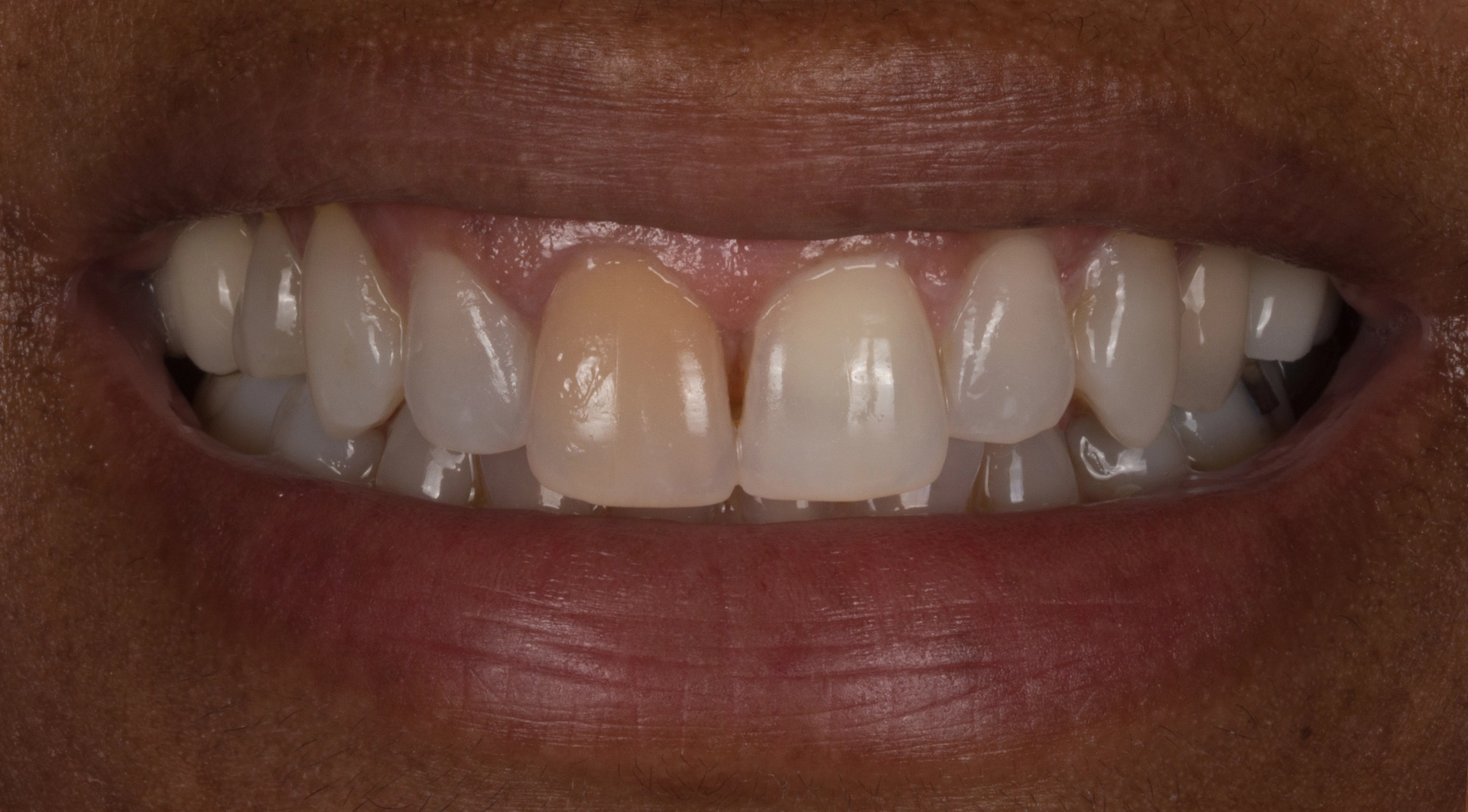
Before
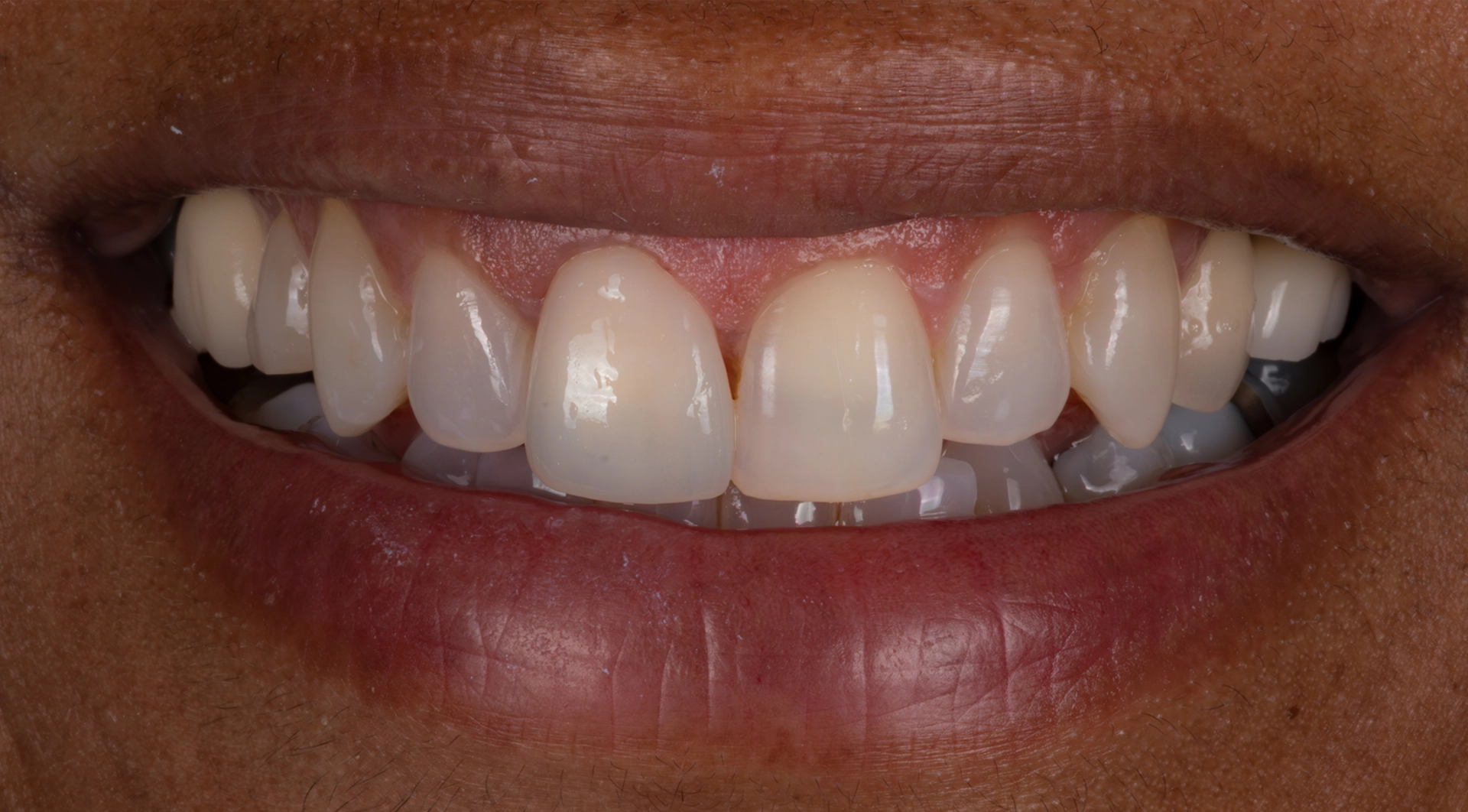
After 6 Years Follow-up
At D’Amico Dental Care, veneers are treated as a structured clinical system, not a cosmetic shortcut.
The goal is simple:
Reduce uncertainty at every stage before the final veneers are bonded.
Instead of starting with drilling or impressions, treatment begins with understanding the patient’s goals, facial proportions, and bite.
This diagnostic stage helps patients visualize the outcome before committing.
Diagnostic first consultations and documented decisions
During the first phase, clinicians evaluate:
- facial symmetry
- smile line
- tooth proportions
- bite function
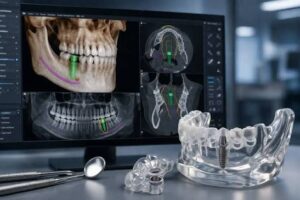
High-resolution photography and digital scans allow precise planning.
Patients are not asked to “trust the process.”
They see the reasoning behind each decision.
Smile design patients can evaluate before treatment
Using digital smile design and mock-ups, patients can preview their new smile.
This stage activates a powerful psychological shift.
Instead of imagining results, patients experience them visually.
Mirror neurons fire. Confidence builds.
And decisions become easier.
Precision Dentistry: Digital Workflows & European Ceramics
Longevity also depends on manufacturing precision.
Small discrepancies measured in microns can influence fit and bonding strength.
D’Amico Dental Care uses digital workflows to reduce these variables.
Why material certification matters
Not all ceramics are identical.
Certified dental ceramics such as lithium disilicate (IPS e.max) provide:
- high fracture resistance
- stable translucency
- predictable bonding compatibility
Material certification ensures restorations meet strict European medical standards.
The role of lab communication and ceramic layering
A veneer is rarely produced by one person alone.
It is the collaboration between dentist and specialized dental laboratory technician.
Precise lab communication ensures:
- natural translucency
- correct thickness
- optimal structural support
When this collaboration works well, veneers become both aesthetic and mechanically durable.
Controlled Bonding & Final Verification
The final appointment is where long-term success is truly secured.
Bonding is performed under strict isolation to prevent contamination.
But the process does not end there.
Why veneers fail at delivery, not years later
Many veneer complications originate from improper seating or cement removal during delivery.
Excess cement can irritate gums or weaken margins.
That is why the final stage involves meticulous inspection.
Final bite checks, polish, and long term stability
Before patients leave, dentists verify:
- bite balance in multiple jaw movements
- veneer margin smoothness
- polish quality
- gum response
These steps may seem small.
But collectively they transform veneers from a cosmetic treatment into a long-term restoration.
Schedule a diagnostic smile consultation at D’Amico Dental Care in Wayland & Watertown MA, where your smile is analyzed, designed, and explained before any treatment begins.
Ready to Learn How Long Your Smile Can Last?
Book your diagnostic smile consultation at D’Amico Dental Care today.
📍 359 Main St, Watertown, MA 02472 | 📍 241 Boston Post Rd, Wayland, MA 01778
✉️ [email protected]I like it, the place is clean, you can make yourself a coffee to wait, my boyfriend got an implant and the professionalism was excellent, I have no complaints about it, the doctor’s work was impeccable and we were given a term to pay $ 5000

Dr. D’Amico always makes sure his patients are happy prior leaving the office. I had an implant done, and Dr. D’Amico made sure it has a perfect cut and shade before cementing it permanently. He has high quality equipment, materials, and professional staff that make the office an excellent practice. I highly recommend it to anyone who is looking for a great dentist, friendly staff and top-quality equipment that makes the appointment goes way less painful, much faster, and very precise.
I heard about D’Amico Dental Care on 98.5 The Sports Hub and decided to give them a try! They are located right on Main Street in Watertown, with a huge building and plenty of parking. The office is very impressive, filled with the latest technology and friendly staff. My first appointment with Dr. D’Amico was a comprehensive evaluation, and I could immediately appreciate his expertise, honesty, and recommendations. From there, I setup a cleaning a few days later, and it was one of the most thorough cleanings I’ve ever had. I highly recommend if you are looking for a new dentist, have new or different insurance, or need a crown/implant. You can tell Dr. D’Amico has put a lot of time and effort into making his practice stand out in every aspect of patient experience, so go check it out – you’ll be very impressed!
BEST dental office I’ve ever visited, and that’s from someone that works in a hospital, but was terrified of dentist visits all my life.. 🙂 I have many complex issues (most stemming from the Eastern European dentistry of limited resources in my youth, and some from me just not seeing dentists regularly later on….). When I moved in the area I looked for an experienced dentist, preferably with academic connections. Dr D’Amico is faculty at Tufts Dental School. He competently took care of all my problems, explained me the options for each issue, and helped me chose the best solution. He also has an in-office machine can make these great looking ceramic crowns in few hours, and a computerized local anesthesia machine that makes all procedures practically pain free. So far, I had a small bone graft in the lower jaw followed by an implant, some fillings, a ceramic crown – and results are just amazing. I had regular hygienist visits every 3 months with Dawn, she is excellent ! I was referred for other procedures to an excellent oral surgeon in the area. Dr D’Amico’s office staff – special mention to Anna and Eva – is very competent, friendly and warm. Most of all, I can’t believe I am not stressed out when I go to my dental visits… Very highly recommended for anyone that can identify with my story !
First time patient at Dr D’Amico Dental Care in Watertown. Very pleased with the service from the Technicians & the front desk employee! Found Dr Daniel very pleasant to talk too & explained everything thoroughly. Very happy with results!
The first time I went to D’Amico was to get acquainted, get current with xrays and tell my woeful story of letting go of my dental care for years. I was met with compassion, concern and reassurance. I was smitten by the staff, Dr. Chris, and very taken by the immaculate, modern facility. Many clinicians across different fields hesitate to invest in equipment that both improves their performance and the patient’s experience. I worked in the medical field in communications, and I’ve seen lots of variations on both poor and quality care. This place is topnotch. Period. Today, they literally brought me to tears. My first cleaning in years. Angela was thorough, kind, super aware, and truly the best dental hygienist I’ve ever seen. She is a perfect match for this practice that is friendly to the fearful and truly on top of dental practice advances. It has been years and I will return. This gifted group is poised to help me turn my dental health around. I am grateful.
Frequently Asked Questions
1. Will I need to replace my veneers every 10 years?
While the industry “average” is often cited as 10 years, this is a clinical benchmark, not a deadline. In our precision-driven workflow at D’Amico Dental Care, we aim for 15 to 20+ years. Longevity is less about the material and more about the accuracy of the bond to your enamel. If the seal remains intact and your bite is balanced, there is no biological reason for a veneer to “expire” at a specific date.
2. Is the tooth preparation reversible, or will it damage my natural teeth forever?
This is the most common fear (Cortisol trigger). Modern veneers at our Wayland & Watertown MA clinic use minimally invasive or “No-Prep” protocols. Unlike old-fashioned “crown” preparations that grind teeth into pegs, we typically remove only 0.3mm to 0.5mm of enamel—roughly the thickness of a contact lens. While the process is generally irreversible because enamel doesn’t grow back, our goal is to preserve the structural integrity of your tooth, not compromise it.
3. Will my teeth become permanently sensitive after getting veneers?
Post-operative sensitivity is usually a sign of poor temporary restorations or an unbalanced bite. Because we use Digital Occlusion analysis, we ensure the veneers don’t interfere with your natural jaw movement. By preserving the majority of your natural enamel during preparation, we keep the tooth’s “nerve center” (the pulp) protected, meaning any minor sensitivity usually fades within a few days.
4. What happens if a veneer chips or falls off? Is it a dental emergency?
While rare with high-grade Lithium Disilicate (IPS e.max), a chip is rarely a medical emergency, but it is an aesthetic one. Most “de-bonding” issues happen because the veneer was bonded to dentin instead of enamel, or because of undiagnosed nighttime grinding (Bruxism). If a veneer fails, we don’t just glue it back; we analyze why it failed to ensure the replacement lasts for the long term.
5. Do porcelain veneers stain over time if I drink coffee, tea, or red wine?
One of the “Blue Ocean” advantages of high-quality European ceramics is their non-porous surface. Unlike natural enamel or composite resin, high-glazed porcelain is chemically inert. It cannot absorb pigments from food or drink. While the cement at the very edge (the margin) might slightly darken over a decade, the veneer itself will stay as bright as the day it was bonded.
6. Why is there such a massive price difference between “Turkey Teeth” and precision veneers in Wayland & Watertown MA?
This is a classic Value vs. Price dilemma. Lower-cost “smile makeovers” often rely on aggressive tooth reduction and generic, “one-size-fits-all” lab work. At D’Amico Dental Care, you are investing in a Diagnostic Clinical System. We use individualized layering, European-certified materials, and a digital workflow that prevents the “biological cost” of losing healthy tooth structure. The “cheapest” veneers often become the most expensive when they require root canals or replacements after 3 years.
7. How do receding gums affect the look of my veneers as I age?
The veneers won’t move, but your gum line might due to natural aging or aggressive brushing. This is why we use supra-gingival or equigingival margins whenever possible. By mimicking the natural emergence profile of a tooth, we ensure that even if minor recession occurs years later, the transition remains natural and doesn’t reveal a “fake” dark line at the top of the tooth.
8. What if I don’t like the “Final Look” once they are bonded?
We eliminate the Paradox of Choice and fear of regret through our “Test Drive” phase. Before the final porcelain is even ordered, you wear a trial smile (mock-up) made of temporary resin. You can live with it, speak with it, and see it in different lighting. We do not move to final porcelain until you have physically and emotionally “vetted” your new look. There are no surprises at the final appointment.