Quick Summary
- The Core Issue: Most adults brush with high pressure and incorrect angles, leading to receding gums and worn enamel over time.
- The Solution: Dental professionals recommend the Modified Bass Technique, angling bristles at 45 degrees toward the gumline with gentle micro-movements.
- Key Timing Rules: Avoid brushing immediately after eating acidic foods to protect softened enamel; instead, rinse with water and wait 30 minutes.
- Smart Tool Selection: Gentle micro-textured soft bristles combined with hydroxyapatite or fluoride toothpaste yield the highest clinical protection.
Why Most People Still Brush Their Teeth the Wrong Way (The Data Is Shocking)
Maintaining oral health seems simple, yet clinical observations consistently show that the vast majority of adults use techniques that inadvertently harm their teeth and gums. Brushing is a daily habit, but when executed with incorrect mechanics, it transitions from a protective routine into a source of chronic micro-trauma.
The 3 Biggest Toothbrushing Myths Dentists Are Tired of Hearing
The first major myth is that harder brushing equals cleaner teeth. Many individuals believe that aggressive scrubbing is necessary to remove stubborn plaque. In reality, plaque has a soft, biofilm consistency that requires systematic disruption rather than high-force abrasion. Applying excess force does not clean better; it merely accelerates wear on delicate tissues.
The second myth is that the primary goal of brushing is to polish the flat surfaces of the teeth. While the visible faces of your teeth do need cleaning, the most critical zone is the gingival sulcus, the shallow pocket where your teeth meet your gums. This is where harmful bacteria accumulate and initiate inflammatory responses.
The third myth is that mouthwash can fully replace brushing or flossing when you are in a rush. Chemical rinses can reduce temporary bacterial loads and freshen breath, but they lack the mechanical action required to break up the sticky structural matrix of dental plaque.
What Happens to Your Teeth After 10 Years of Incorrect Brushing
When incorrect brushing habits persist for a decade or more, the cumulative structural damage becomes highly visible. The constant lateral scrubbing motion wears away the enamel near the gumline, creating wedge-shaped notches known as abfraction lesions or cervical wear.
Simultaneously, the delicate gum tissue retreats from the chronic physical stress. This gum recession exposes the underlying dentin, which is significantly softer than enamel and contains thousands of microscopic tubules leading directly to the dental nerve. Over a ten-year horizon, this exposure typically results in chronic dentin hypersensitivity, increased susceptibility to root cavities, and a gradual compromise of the tooth’s structural integrity.
The Modified Bass Technique, The Only Brushing Method Dentists Actually Recommend in 2026
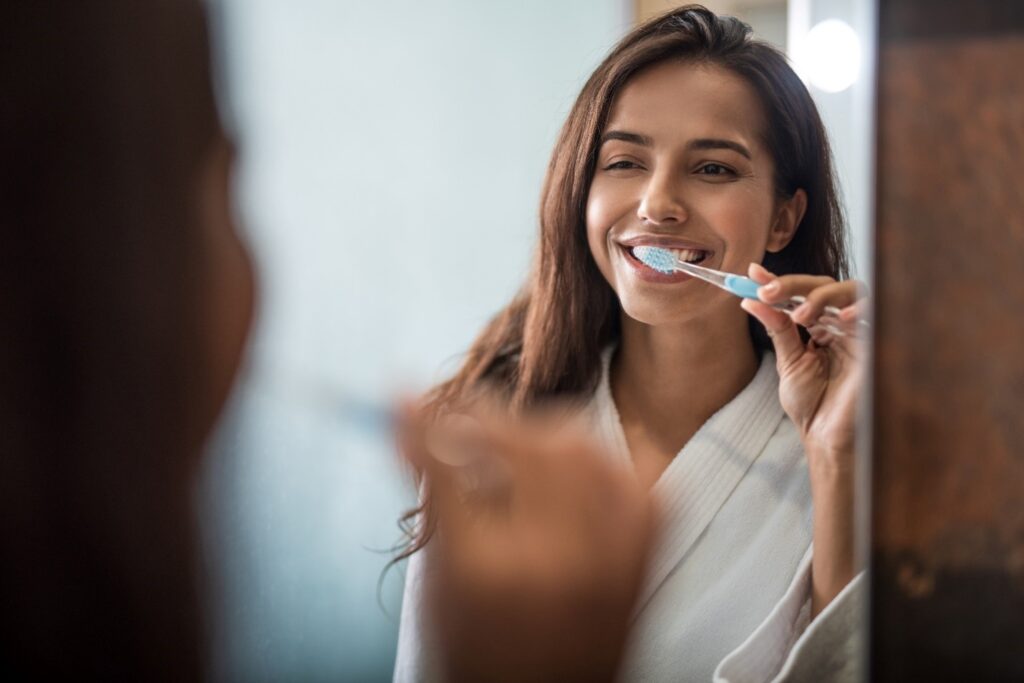
To prevent long-term structural wear while optimizing plaque removal, clinical consensus points to one primary method: the Modified Bass Technique. This approach focuses on cleaning the critical boundary between the tooth and the gumline without causing mechanical trauma.
Step-by-Step: The Perfect 2-Minute Brushing Routine (With Timer Guide)
To achieve thorough plaque disruption, divide your mouth into four distinct sections: upper right, upper left, lower right, and lower left. Dedicate exactly 30 seconds to each section.
- 0:00 to 0:30 (Upper Right Quadrant): Focus on the outer surfaces, transition to the inner surfaces using the 45-degree angle, and finish with the chewing surfaces.
- 0:30 to 1:00 (Upper Left Quadrant): Repeat the systematic process, ensuring you maintain light, controlled pressure.
- 1:00 to 1:30 (Lower Right Quadrant): Pay extra attention to the inner surfaces near the tongue, where saliva pools and tartar forms quickly.
- 1:30 to 2:00 (Lower Left Quadrant): Complete the final segment, ensuring the brush reaches the very back of the rear molars.
Manual vs. Electric Toothbrush: What Dental Professionals Actually Use Themselves
While both tools can achieve excellent results when used correctly, electric toothbrushes offer distinct clinical advantages. High-quality electric models utilize oscillating-rotating or sonic technology to deliver thousands of micro-movements per minute, far exceeding what is humanly possible with a manual brush.
More importantly, many electric models feature built-in pressure sensors that instantly alert you when you are pressing too hard. This feature is highly effective at preventing mechanical wear. However, if you prefer a manual toothbrush, it is entirely capable of maintaining superb oral health, provided you strictly apply the correct technical angles and do not rush the process.
The 45-Degree Rule That Changes Everything
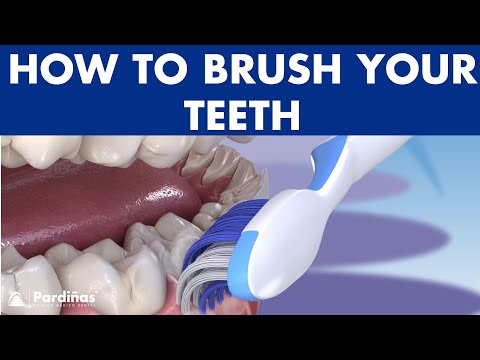
The defining element of proper brushing is the angle of the bristles. You must tilt the toothbrush head at a 45-degree angle relative to the long axis of your teeth, pointing the bristles gently toward the gumline.
This specific angle allows the ultra-fine tips of the bristles to slip slightly beneath the gum margin, clearing out plaque from the areas where gum disease typically originates. Instead of sawing back and forth, use tiny, vibrating, circular motions to wiggle the bristles in place, then sweep the brush head downward away from the gumline.
The 7 Critical Mistakes You’re Making Every Morning (And Every Night)
Even with the correct technique, minor timing and habitual mistakes can undermine your efforts to protect your smile.
Mistake #1: Brushing Too Hard (Why Your Gums Are Receding)
Aggressive brushing acts like fine sandpaper on your oral tissues. Gums are highly vascular, delicate structures. When subjected to high friction, they undergo a protective retreat, exposing the sensitive roots. Once gum tissue recedes, it does not naturally grow back, often requiring professional surgical intervention to repair.
Mistake #2: Brushing Right After Eating (This Destroys Your Enamel)
When you consume foods or beverages, especially those containing carbohydrates or acids, the pH levels in your mouth drop. This acidic environment temporarily softens and demineralizes your enamel. If you brush immediately after eating, you physically scrub away this softened layer of enamel. It is highly recommended to rinse with plain water after meals and wait at least 30 minutes for your saliva to naturally neutralize the acids and remineralize the enamel before brushing.
Mistake #3: Ignoring Your Tongue and Gumline
Plaque biofilm forms on every surface inside the oral cavity, not just on the teeth. The tongue, with its deeply textured surface, acts as a primary reservoir for oral bacteria. Neglecting to clean the tongue and the precise gumline allows bacteria to rapidly recolonize the teeth shortly after you finish brushing.
Mistake #4: Using the Wrong Toothpaste for Your Specific Needs
Using a highly abrasive whitening toothpaste when you suffer from thin enamel or gum recession can accelerate structural wear. Toothpaste selection should be tailored to your specific oral environment, focusing on active ingredients that support enamel defense or desensitization.
Mistake #5: Replacing Your Toothbrush Too Late
Over time, toothbrush bristles lose their elasticity, become frayed, and bend outward. Frayed bristles lose their ability to clean effectively and can develop sharp, jagged edges that scratch the gums. To maintain clinical efficiency, replace your toothbrush or brush head every three months, or immediately following an illness.
Mistake #6: Skipping the Inner Surfaces
The inner, lingual surfaces of the teeth are often neglected because they are harder to see and reach. However, these areas are constantly exposed to saliva flow, making them prime locations for mineralized tartar buildup.
Mistake #7: Not Flossing Before Brushing
Flossing first loosens plaque and food particles trapped in the tight spaces between your teeth. When you brush afterward, the active ingredients in your toothpaste, such as fluoride or hydroxyapatite, can freely penetrate those freshly cleared interdental spaces.
What Toothbrush and Toothpaste Should You Actually Use?
Best Toothbrush Type for Sensitive Gums
For sensitive gums, always select a toothbrush labeled soft or extra-soft. Look for tapered, micro-textured bristles made of high-quality synthetic fibers. These bristles bend easily under light pressure, allowing them to clean deep into delicate crevices without scratching or irritating the soft tissues.
Fluoride vs. Hydroxyapatite Toothpaste
Both ingredients serve as excellent, clinically proven tools for strengthening enamel, yet they work through different biological mechanisms.
| Feature | Fluoride Toothpaste | Hydroxyapatite (HA) Toothpaste |
|---|---|---|
| Primary Mechanism | Promotes remineralization by converting enamel hydroxyapatite into more acid-resistant fluorapatite. | Directly binds to enamel, physically filling microscopic micro-cracks with natural calcium and phosphate. |
| Biocompatibility | Highly effective synthetic mineral standard. | Biomimetic material identical to the natural composition of human teeth and bone. |
| Target Benefit | Exceptional cavity prevention and defense against acid attacks. | Superb for desensitizing sensitive teeth by sealing exposed dentinal tubules. |
The Complete Morning and Night Oral Care Routine: A Minute-by-Minute Guide
Your 5-Minute Morning Routine for Healthy Teeth
- Minute 1: Gently floss between all teeth to clear accumulated nighttime biofilm.
- Minutes 2 to 3: Perform a precise, two-minute brushing cycle using the 45-degree Modified Bass Technique.
- Minute 4: Gently clean the surface of your tongue with a dedicated tongue scraper.
- Minute 5: Rinse briefly with water or a nourishing, alcohol-free mouthwash to clear away loose debris.
Your Night Routine: Why It’s More Important Than Morning
During sleep, your salivary flow drops significantly. Because saliva is your mouth’s primary natural defense mechanism, a dry mouth allows oral bacteria to multiply rapidly.
An immaculate nighttime routine is vital because any plaque left on your teeth will sit undisturbed in a low-saliva environment for several hours, greatly accelerating the risk of decay and gum irritation.
The Role of Mouthwash: Do You Actually Need It?
Mouthwash is an optional, supportive tool rather than a necessity. If you choose to use it, select an alcohol-free formula to prevent drying out your oral tissues. It should be used as a finishing touch to deliver targeted active ingredients, not as a replacement for mechanical flossing and brushing.
When Brushing Alone Isn’t Enough: Signs You Need Professional Help
5 Warning Signs Your Brushing Technique Is Damaging Your Teeth
- Bleeding gums during or after brushing, which indicates active localized inflammation.
- Visible notched grooves forming along the base of your teeth near the gumline.
- A sudden increase in sensitivity to hot, cold, or sweet substances.
- Gums that appear to be pulling away from your teeth, making the teeth look longer.
- Persistent localized redness or swelling in specific areas of your mouth.
How Often Should You Really Visit the Dentist?
While a standard six-month interval works well for many, your ideal visit frequency depends on your individual rate of plaque mineralization, genetic predisposition to gum issues, and overall systemic health. A personalized assessment allows for early detection of wear before irreversible damage occurs.
Book Your Initial Assessment at D’Amico Dental Care
At D’Amico Dental Care in Wayland and Watertown MA, we believe that preventive care is the foundation of a lifetime of oral health. Our team focuses on understanding the unique patterns of your oral environment, helping you refine your daily habits, and identifying early signs of structural wear.
An initial assessment allows us to evaluate your current enamel health, measure your gum boundaries, and provide tailored guidance designed specifically for your smile. We welcome you to schedule a comprehensive evaluation to ensure your daily routine is working for you, not against you.
Frequently Asked Questions (FAQ)
1. Why do my gums bleed when I brush, even when I try to be gentle?
Bleeding gums are rarely caused by brushing itself; they are typically a sign of active inflammation known as gingivitis. When bacterial plaque is left along the gumline, the body responds with localized swelling and fragile tissue that bleeds easily under light pressure. Switching to an ultra-soft toothbrush and consistently using the Modified Bass Technique will clear the bacteria, allowing the tissues to heal and stop bleeding within 7 to 14 days. If bleeding persists, a clinical examination is recommended to evaluate deeper tissue health.
2. Can receding gums grow back if I correct my brushing technique?
Once gum tissue has receded and exposed the root surface, it cannot naturally regenerate or grow back on its own. However, correcting your brushing technique immediately stops the progression of further recession and prevents deeper damage to the underlying bone. For areas with significant tissue loss or tooth sensitivity, modern periodontal treatments, such as minimally invasive soft tissue grafting or bonding, can protect the exposed roots and restore the gumline.
3. How do I know if I am pressing too hard while brushing?
A clear indicator of excessive brushing pressure is the condition of your toothbrush bristles. If the bristles splay, bend outward, or lose their original shape within 4 to 6 weeks, you are applying too much mechanical force. Additionally, if you notice sharp sensitivity when drinking cold liquids or see tiny horizontal notches near your gumline, you may be experiencing toothbrush abrasion. An electric toothbrush equipped with a visual pressure sensor is an excellent tool to help train your hand to use light, safe pressure.
4. Is an electric toothbrush really better than a manual toothbrush?
Both manual and electric brushes can achieve excellent oral hygiene when used with correct technique. However, electric toothbrushes provide a clear clinical advantage by delivering thousands of micro-vibrations per minute, removing up to 21% more plaque in hard-to-reach areas without requiring aggressive hand movement. They also feature integrated 2-minute timers and pressure sensors, which make it significantly easier for patients to maintain a safe, thorough, and consistent daily routine.
5. Should I rinse my mouth with water immediately after brushing with toothpaste?
Dental professionals recommend spitting out the excess toothpaste foam without thoroughly rinsing your mouth with water immediately afterward. Leaving a microscopic film of toothpaste on the enamel allows active remineralizing agents, such as fluoride or biomimetic hydroxyapatite, to continue strengthening the tooth surface and sealing dentin tubules for at least 30 minutes. If you prefer to use a mouthwash, choose an alcohol-free formula and use it at a separate time of day.
6. Why are my teeth becoming more sensitive even though I brush twice a day?
Brushing frequency alone does not protect against sensitivity. If you brush aggressively, use a medium or hard-bristled brush, or use high-abrasion whitening toothpastes, you can gradually wear down your protective enamel layer. This exposes the underlying dentin, which contains microscopic channels leading to the nerve. Furthermore, brushing immediately after consuming acidic foods scrubs away temporarily softened enamel, triggering temperature sensitivity.
7. What is the safest way to clean between tightly spaced teeth?
For very tight interdental spaces where standard floss tends to shred, unwaxed or PTFE (monofilament) dental tape is the most effective solution because it glides smoothly between contact points without snapping into the gums. Interdental brushes with coated wire cores or calibrated water flossers are also outstanding alternatives, particularly for patients with dental implants, orthodontic appliances, or bridge work.