Quick Answer You Are Looking For
Choosing the “best dental veneers“ is not about picking a material. It is about choosing the right clinical solution for your specific teeth, bite, and goals.
- Porcelain veneers → strongest, most stain-resistant, ideal for long-term smile transformations
- Composite veneers → conservative, repairable, often ideal when preserving natural enamel matters most
- No-prep veneers → minimal intervention, but only suitable for very specific cases
At D’Amico Dental Care, veneer selection follows a structured clinical decision framework based on diagnostics, digital smile design, and long-term risk evaluation.
The goal is simple: a smile that looks natural, feels comfortable, and stays stable for years.
Ready to Discover Which Veneer Is Right for You?
Book your diagnostic smile consultation at D’Amico Dental Care today.
📍 359 Main St, Watertown, MA 02472 | 📍 241 Boston Post Rd, Wayland, MA 01778
✉️ [email protected]
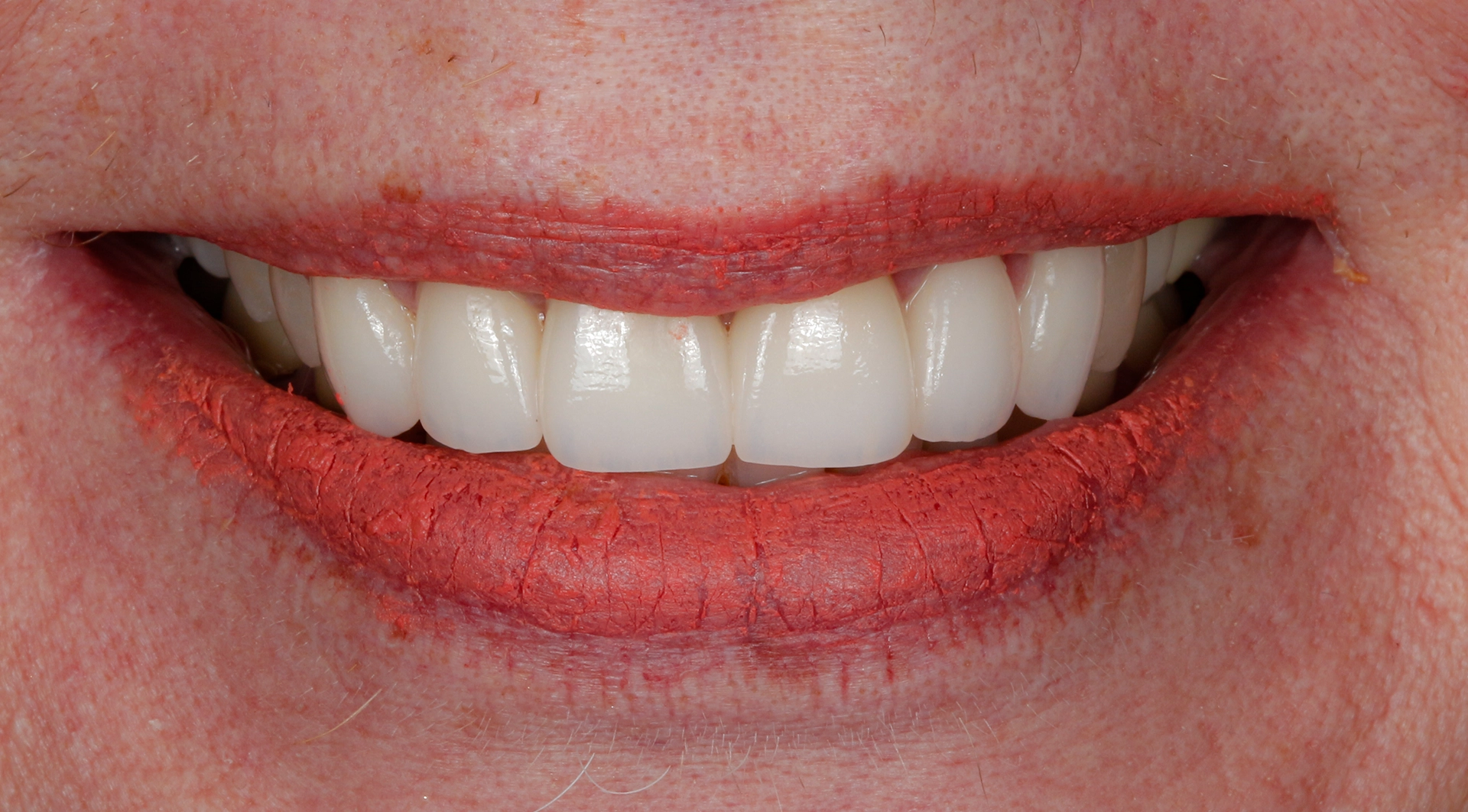
Understanding Veneer Types: Why “Best Veneer” Is a Misleading Question
Most people in Wayland MA & Watertown MA start with the same question:
“What are the best veneers?”
It sounds logical. But clinically, the question is incomplete.
The real question dentists ask is different:
“What type of veneer is safest and most predictable for THIS patient?”
Imagine two patients:
- One has worn enamel and bite pressure
- Another simply wants to close small gaps
Giving them the same veneer material would be like prescribing the same glasses for everyone regardless of eyesight.
The truth is simple but rarely explained online:
Veneers are not products. They are treatment strategies.
And when the strategy fits the biology of your teeth, the result can feel effortless — like the smile you always had, just clearer.
Why Veneers Are Not a Cosmetic Product but a Clinical Decision
Many websites describe veneers as if they were cosmetic accessories.
In reality, veneers interact with three critical biological systems:
- Enamel structure
- Bite mechanics (occlusion)
- Jaw movement patterns
When these factors are ignored, problems can appear later:
- veneer fractures
- gum irritation
- unnatural appearance
- bite discomfort
That is why responsible dentists treat veneers as biomechanical restorations, not decorative shells.
This shift in thinking removes the biggest risk patients fear:
“What if I regret this later?”
A proper diagnostic process answers that question before treatment even begins.
Next, let’s explore the material most people hear about first.
Porcelain (Ceramic) Veneers: The Gold Standard When Indicated Correctly
Many patients imagine porcelain veneers as the Hollywood smile solution.
Sometimes they are exactly that.
But only when the case truly calls for them.
What Porcelain Veneers Actually Are
Porcelain veneers are ultra-thin ceramic restorations bonded permanently to the front surface of teeth.
They are fabricated in dental laboratories using materials such as:
- lithium disilicate
- feldspathic porcelain
- advanced ceramic composites
These materials mimic natural enamel by reproducing:
- light reflection
- translucency
- microscopic texture
The result is a restoration that behaves optically like natural teeth.
This is why well-designed porcelain veneers rarely look fake.
When Porcelain Veneers Are the Best Choice
Porcelain veneers shine in cases where durability and optical realism matter most.
Typical indications include:
- severely stained teeth resistant to whitening
- worn enamel from grinding
- multiple shape irregularities
- comprehensive smile design cases
In these situations, porcelain provides something unique:
long-term structural stability with exceptional aesthetics.
Imagine smiling in bright daylight and not wondering whether your teeth look artificial.
That confidence is often the real outcome patients seek.
Porcelain Veneers at D’Amico Dental Care: How Predictability Is Engineered
At D’Amico Dental Care, porcelain veneers are not placed until three checkpoints are satisfied:
- Digital smile simulation approved by the patient
- Bite stability analysis confirming safe load distribution
- Mock-up trial smile worn before final treatment
This sequence dramatically reduces uncertainty.
Patients do not guess how their smile will look.
They experience it first.
But porcelain is not always the most conservative option.
That leads to a different philosophy of treatment.
Composite Veneers: When Conservative and Reversible Matters More
Some patients want improvement without aggressive treatment.
Others feel nervous about permanent changes.
That is where composite veneers enter the conversation.
What Composite Veneers Really Are (Beyond “Cheaper Option”)
Composite veneers are crafted directly on the tooth using advanced dental resin materials.
Unlike porcelain veneers, they are sculpted by the dentist during the appointment.
This allows:
- minimal or no enamel removal
- immediate results
- easy repairs if damage occurs
In skilled hands, composite veneers can look remarkably natural.
And importantly, they preserve more of your original tooth structure.
Ideal Candidates for Composite Veneers
Composite veneers are often ideal for:
- small chips or worn edges
- closing minor gaps
- reshaping uneven teeth
- younger patients who may want reversible solutions
For these situations, the conservative nature of composite restorations can be a significant advantage.
It protects something irreplaceable:
your natural enamel.
Longevity, Maintenance & Aesthetic Trade Offs
Composite veneers typically last 5–7 years before refinishing or replacement may be needed.
Compared with porcelain:
Pros:
- lower cost
- repairable
- minimally invasive
Considerations:
- slightly lower stain resistance
- less long-term polish retention
But many patients appreciate the flexibility.
If dentistry evolves in the future, their teeth remain adaptable to new options.
Composite Veneers at D’Amico Dental Care: Why They Are Never “Quick Fixes”
Composite veneers sometimes get marketed as fast cosmetic dentistry.
That approach sacrifices longevity.
At D’Amico Dental Care, composite veneers follow a layered artistic technique, replicating enamel and dentin layers.
The result:
- better translucency
- smoother transitions
- more natural light reflection
Patients often tell us something interesting:
Friends notice their smile looks better — but cannot tell why.
That subtle realism is the real goal.
No Prep & Minimal Prep Veneers: When “Less” Is Actually More
The idea of no drilling veneers is appealing.
And in certain cases, it truly works.
But this approach requires strict case selection.
What No Prep Veneers Can and Cannot Do
No prep veneers are ultra-thin ceramic shells bonded without removing enamel.
They work best when teeth are:
- slightly small
- spaced apart
- properly aligned
They do not work well when teeth are already bulky or severely rotated.
Otherwise the result can look overcontoured.
The principle is simple:
Minimal intervention only works when biology allows it.
Who Should Not Get No Prep Veneers
No prep veneers are usually unsuitable for:
- crowded teeth
- large restorations
- heavy bite pressure
- major color corrections
In those cases, controlled preparation often produces better long-term results and healthier gum contours.
The safest plan is the one that respects both aesthetics and biology.
Veneer Material Comparison: A Decision Matrix Patients Actually Understand
Patients often feel overwhelmed comparing options.
Here is the simplified clinical reality.
| Type | Longevity | Aesthetics | Preparation | Best For |
|---|---|---|---|---|
| Porcelain Veneers | 10–20+ years | Exceptional | Minimal enamel reshaping | Full smile transformations |
| Composite Veneers | 5–7 years | Very good with skilled artistry | Minimal or none | Conservative improvements |
| No Prep Veneers | Similar to porcelain if indicated | Excellent in ideal cases | None | Small teeth or gaps |
The real decision is not which is “best.”
It is which is biologically safest and visually natural for you.
How Dentists at D’Amico Dental Care Choose Veneers: Our Clinical Decision Framework
Patients often assume dentists simply choose a veneer type.
In reality, the process is structured.
It protects the outcome.
Step 1: Diagnostic Evaluation
Before discussing veneers, we analyze the entire smile system.
This includes:
- 3D intraoral scanning
- facial photography
- occlusal (bite) evaluation
- gum health assessment
This stage reveals hidden risks before treatment begins.
Step 2: Smile Design You Can Evaluate Before Treatment
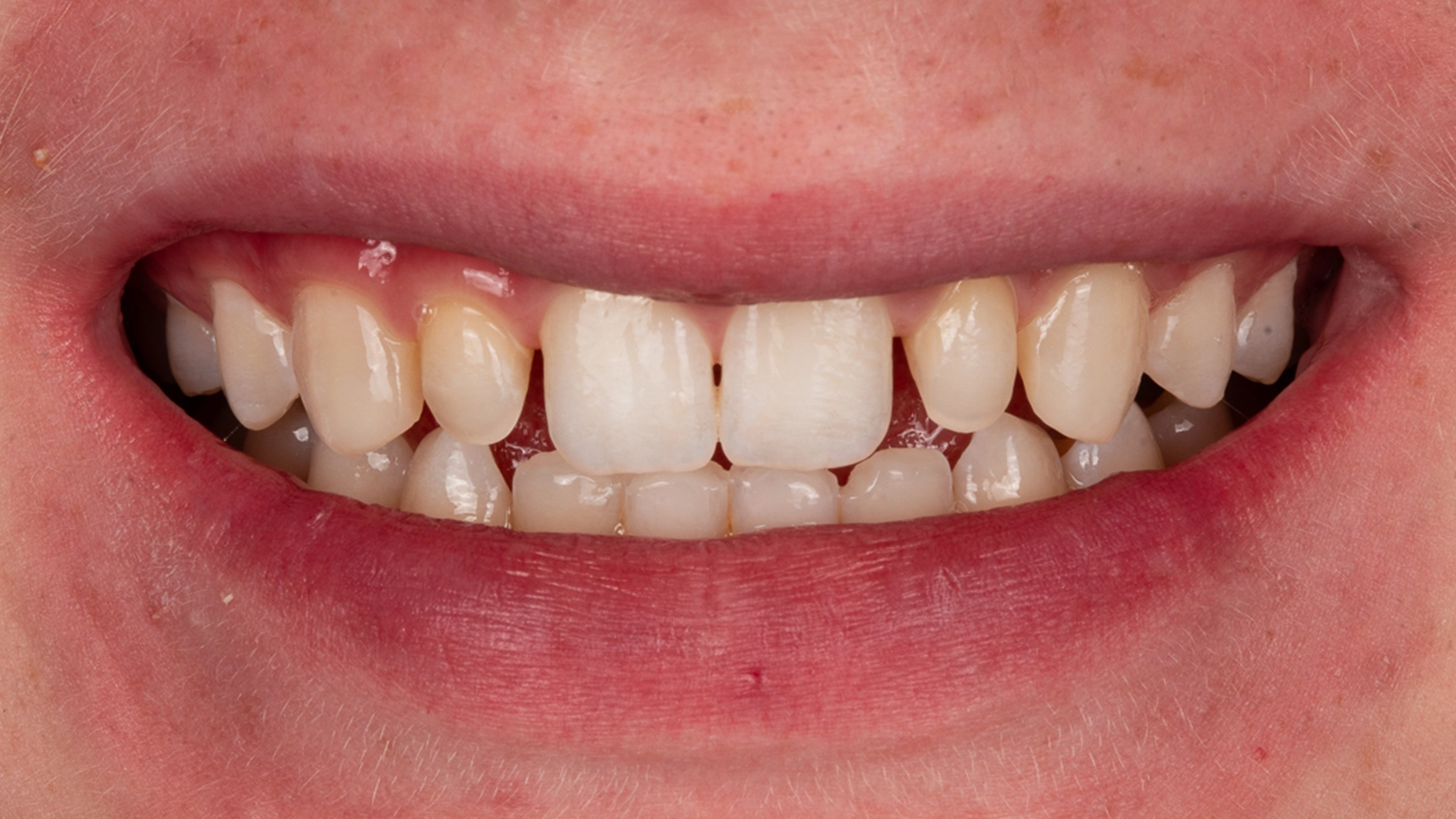
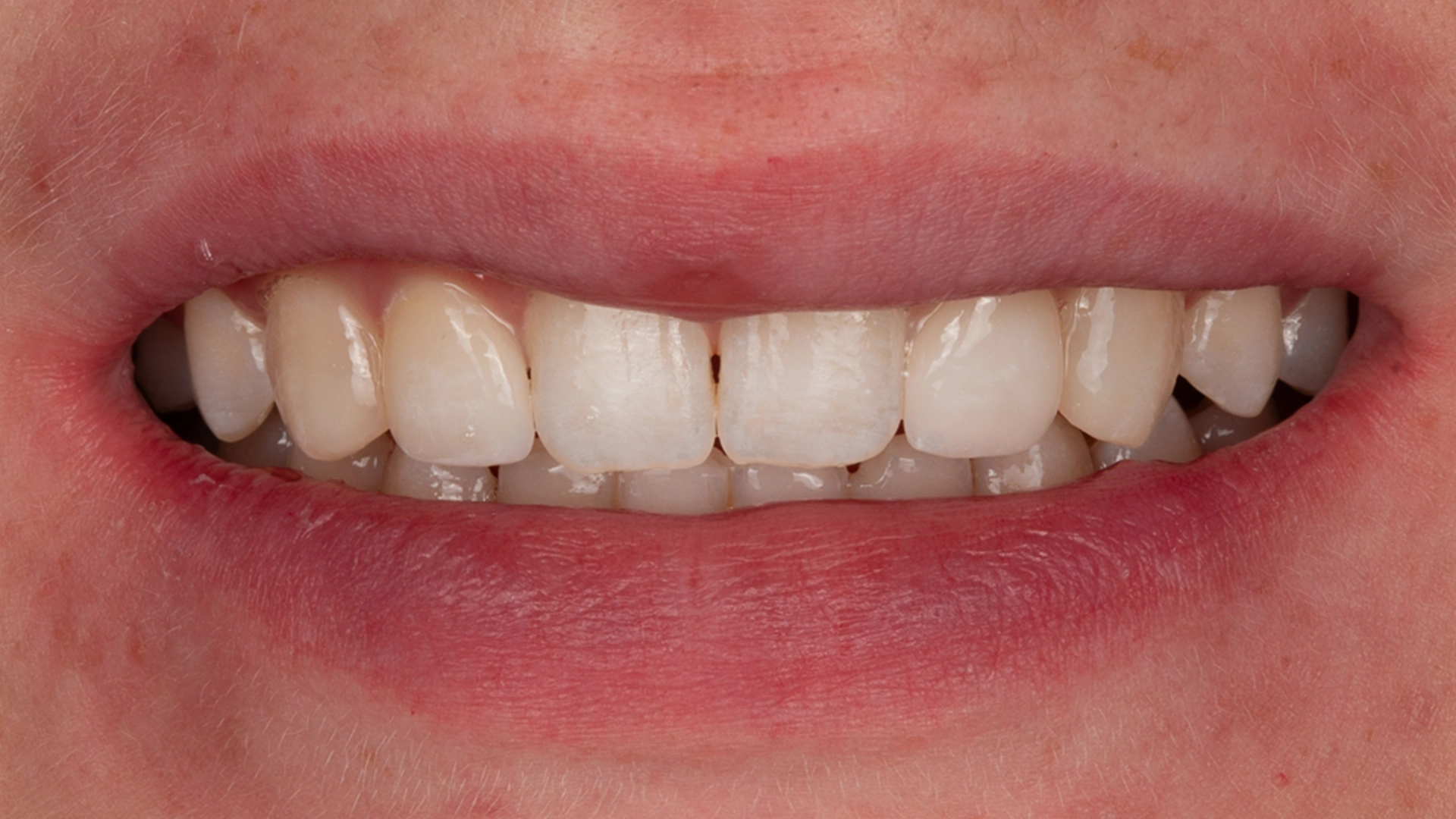
Patients preview their new smile through digital smile design and physical mock-ups.
You see it.
You feel it.
You approve it.
Only then do we proceed.
This removes one of the biggest fears in cosmetic dentistry:
uncertainty.
Step 3: Material Selection Based on Risk, Not Preference
Material choice depends on:
- enamel thickness
- bite pressure
- aesthetic goals
- long-term maintenance
This ensures the selected veneer type fits your biology, not just your expectations.
Step 4: Controlled Execution & Long Term Monitoring
Precision bonding techniques and regular follow-ups ensure veneers remain stable.
We monitor:
- bite changes
- gum health
- surface wear
A beautiful smile should not just look good today.
It should age gracefully with you.
Ready to Discover Which Veneer Is Right for You?
Most people delay veneer consultations because they fear pressure or irreversible decisions.
At D’Amico Dental Care, the first step is different.
It is a diagnostic smile evaluation, not a treatment commitment.
You will leave with:
- a clear understanding of your options
- a digital preview of possible results
- honest clinical guidance
Book your smile evaluation and discover the safest path to the smile you want.
Ready to Discover Which Veneer Is Right for You?
Book your diagnostic smile consultation at D’Amico Dental Care today.
📍 359 Main St, Watertown, MA 02472 | 📍 241 Boston Post Rd, Wayland, MA 01778
✉️ [email protected]I like it, the place is clean, you can make yourself a coffee to wait, my boyfriend got an implant and the professionalism was excellent, I have no complaints about it, the doctor’s work was impeccable and we were given a term to pay $ 5000

Dr. D’Amico always makes sure his patients are happy prior leaving the office. I had an implant done, and Dr. D’Amico made sure it has a perfect cut and shade before cementing it permanently. He has high quality equipment, materials, and professional staff that make the office an excellent practice. I highly recommend it to anyone who is looking for a great dentist, friendly staff and top-quality equipment that makes the appointment goes way less painful, much faster, and very precise.
I heard about D’Amico Dental Care on 98.5 The Sports Hub and decided to give them a try! They are located right on Main Street in Watertown, with a huge building and plenty of parking. The office is very impressive, filled with the latest technology and friendly staff. My first appointment with Dr. D’Amico was a comprehensive evaluation, and I could immediately appreciate his expertise, honesty, and recommendations. From there, I setup a cleaning a few days later, and it was one of the most thorough cleanings I’ve ever had. I highly recommend if you are looking for a new dentist, have new or different insurance, or need a crown/implant. You can tell Dr. D’Amico has put a lot of time and effort into making his practice stand out in every aspect of patient experience, so go check it out – you’ll be very impressed!
BEST dental office I’ve ever visited, and that’s from someone that works in a hospital, but was terrified of dentist visits all my life.. 🙂 I have many complex issues (most stemming from the Eastern European dentistry of limited resources in my youth, and some from me just not seeing dentists regularly later on….). When I moved in the area I looked for an experienced dentist, preferably with academic connections. Dr D’Amico is faculty at Tufts Dental School. He competently took care of all my problems, explained me the options for each issue, and helped me chose the best solution. He also has an in-office machine can make these great looking ceramic crowns in few hours, and a computerized local anesthesia machine that makes all procedures practically pain free. So far, I had a small bone graft in the lower jaw followed by an implant, some fillings, a ceramic crown – and results are just amazing. I had regular hygienist visits every 3 months with Dawn, she is excellent ! I was referred for other procedures to an excellent oral surgeon in the area. Dr D’Amico’s office staff – special mention to Anna and Eva – is very competent, friendly and warm. Most of all, I can’t believe I am not stressed out when I go to my dental visits… Very highly recommended for anyone that can identify with my story !
First time patient at Dr D’Amico Dental Care in Watertown. Very pleased with the service from the Technicians & the front desk employee! Found Dr Daniel very pleasant to talk too & explained everything thoroughly. Very happy with results!
The first time I went to D’Amico was to get acquainted, get current with xrays and tell my woeful story of letting go of my dental care for years. I was met with compassion, concern and reassurance. I was smitten by the staff, Dr. Chris, and very taken by the immaculate, modern facility. Many clinicians across different fields hesitate to invest in equipment that both improves their performance and the patient’s experience. I worked in the medical field in communications, and I’ve seen lots of variations on both poor and quality care. This place is topnotch. Period. Today, they literally brought me to tears. My first cleaning in years. Angela was thorough, kind, super aware, and truly the best dental hygienist I’ve ever seen. She is a perfect match for this practice that is friendly to the fearful and truly on top of dental practice advances. It has been years and I will return. This gifted group is poised to help me turn my dental health around. I am grateful.
Frequently Asked Questions
1. Will my veneers look fake or bulky?
Modern veneer design focuses on micro-layered translucency, not opacity. When digital smile design and facial proportion mapping are used, veneers sit within your natural tooth envelope and look indistinguishable from real enamel. Bulkiness usually happens only when case selection is wrong — not the material.
2. How long do veneers actually last in real life?
Porcelain veneers typically last 10–20+ years with proper bite protection and hygiene. Composite veneers last 5–7 years, but they are repairable. Longevity depends far more on your bite forces, grinding habits, and gum health than the material itself.
3. Will veneers damage my natural teeth?
No, when planned correctly. Most complications come from over-preparation or placing veneers on teeth that weren’t good candidates. Minimalistic preparation, strong enamel bonding, and controlled bite design protect the underlying tooth structure.
4. Can I get veneers if I grind my teeth (bruxism)?
Yes — but only with a bite-protected treatment plan. Many bruxers require:
- porcelain with higher strength
- occlusal adjustment
- a night guard
Without these steps, veneers may chip or debond. With them, results are stable long-term.
5. What’s the safest veneer material if I have thin enamel?
Patients with thin enamel often benefit from:
- composite veneers (most conservative)
- minimal-prep porcelain veneers where appropriate
The decision is based on enamel mapping using 3D scans. The safest option is the one that preserves biological structure, not the one that looks popular online.
6. Do veneers stain like natural teeth?
Porcelain veneers have high stain resistance due to their glazed ceramic surface. Composite veneers can stain over time, but they are easily polished or resurfaced. Daily habits (coffee, tea, smoking) influence long-term brightness in both cases.
7. How many teeth should I veneer for a natural smile?
For most smiles, a natural appearance requires veneering the “smile zone” — usually 6 to 10 upper front teeth. This depends on how wide your smile is and how much tooth shows when you speak or laugh. A digital smile simulation reveals the exact number.
8. Can veneers fix crooked teeth or should I get orthodontics first?
Mild alignment issues can be corrected with veneers. Moderate to severe crowding usually needs orthodontic correction first (clear aligners or braces) to avoid bulky results and unnecessary enamel removal. The safest pathway combines both disciplines.
9. Is getting veneers painful or uncomfortable?
With modern minimal-prep techniques and local anesthesia, most patients report feeling pressure, not pain. Temporary veneers protect sensitivity during the transition phase.